Guide
Packing a case so it arrives the way it left
Rolling against folding, where the weight goes, what the law says about batteries, and the twenty minutes that decide whether anything is creased.
A case is a box that gets thrown. Everything in this guide follows from that one fact: the hold is not gentle, the case will land on a corner, and what you can control is how the contents are arranged when it does.
None of what follows needs equipment. It needs about twenty minutes and a different order of operations from the one most people use.
Rolling against folding, settled
Rolling wins for most clothes and loses for a few. The reason is not magic. A roll has no single crease line, so a shirt that has been rolled for eight hours comes out with a soft wave instead of a sharp fold across the chest.
Roll t-shirts, knitwear, jeans, underwear and anything jersey. Fold shirts with a collar, blazers and anything with a structured shoulder, because a roll destroys the shape those garments are built around.
The technique that matters more than either is layering by weight rather than by garment. Heavy things go at the wheel end. Light things go at the handle end. When the case stands upright, which is how it spends most of its life, the weight sits at the bottom and the case stops trying to fall over.
- Wheel end: shoes in bags, toiletry bag, anything dense.
- Middle: rolled clothes, packed tight enough that nothing shifts.
- Handle end: the light layer, and the one flat item you want on top when you open it.
- Corners: socks and underwear, which is the only place they should ever be.
Cases with a divider panel and cross straps
See all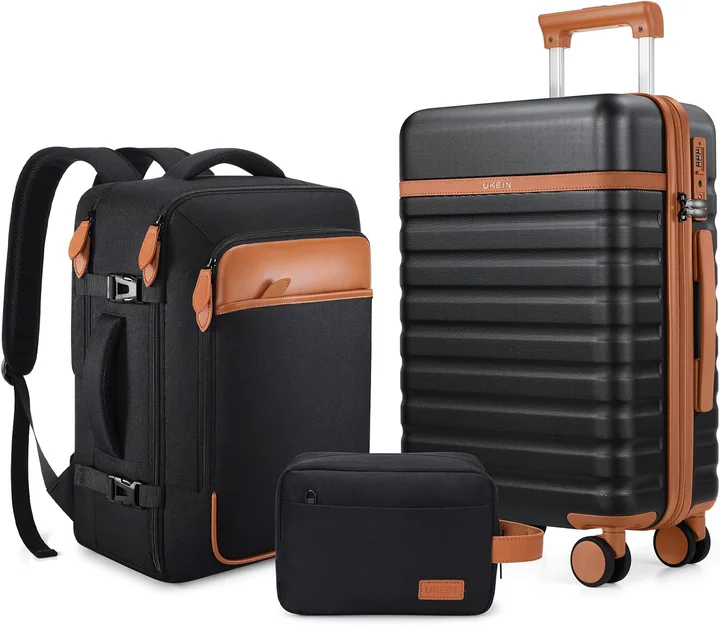

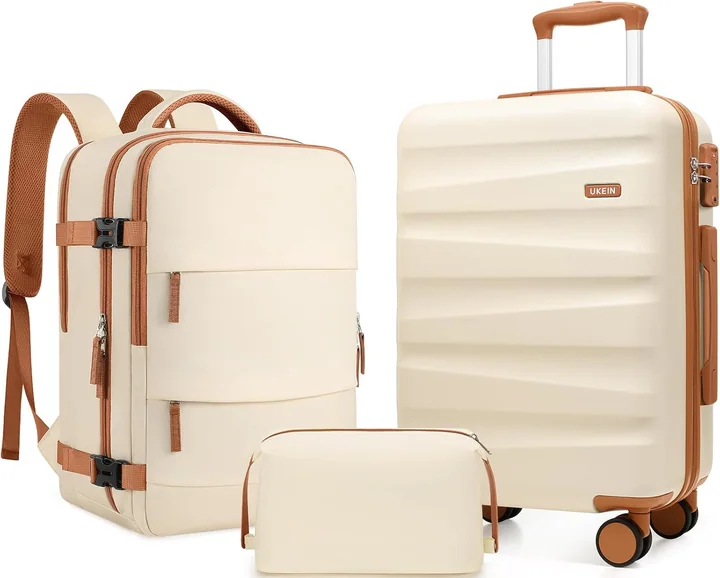
Luggage Set with Backpack, Hardshell Carry On Luggage Airline Approved
20" · 3 pieces 4.6 out of 5 (286) $69.99 - $79.99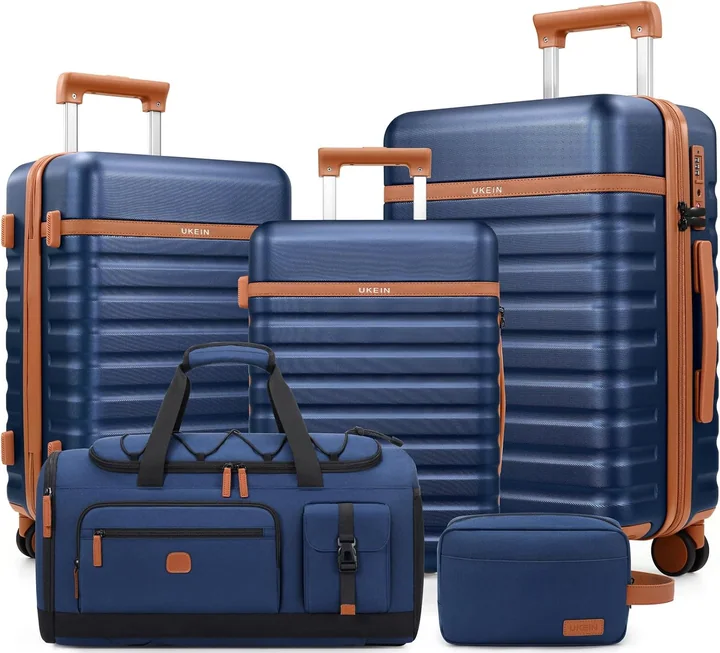
Luggage Sets 5Piece, Carry On Luggage Large Checked Suitcase Set
5 pieces 4.6 out of 5 (231) $129.98What compression straps are for
Every hard case in this range has cross straps in one half and a zippered divider panel in the other. Most people use the straps to hold the clothes down and stop there. They do more than that.
Air is the enemy of a packed case, and not because of space. Air lets contents move. A case with two inches of slack at the top arrives with everything shuffled to one end, and the shuffle is what creases the clothes rather than the packing.
Pull the straps until the pile stops moving when you push it with a flat hand. That is the correct tension. Tighter than that compresses the clothes into each other and sets the creases you were trying to avoid.
The divider panel on the other side is for the things that should not touch the clothes. Shoes, a wash bag, a cable pouch. Zip it shut and the case is two separate rooms instead of one.
The wet pocket, and why it is not a gimmick
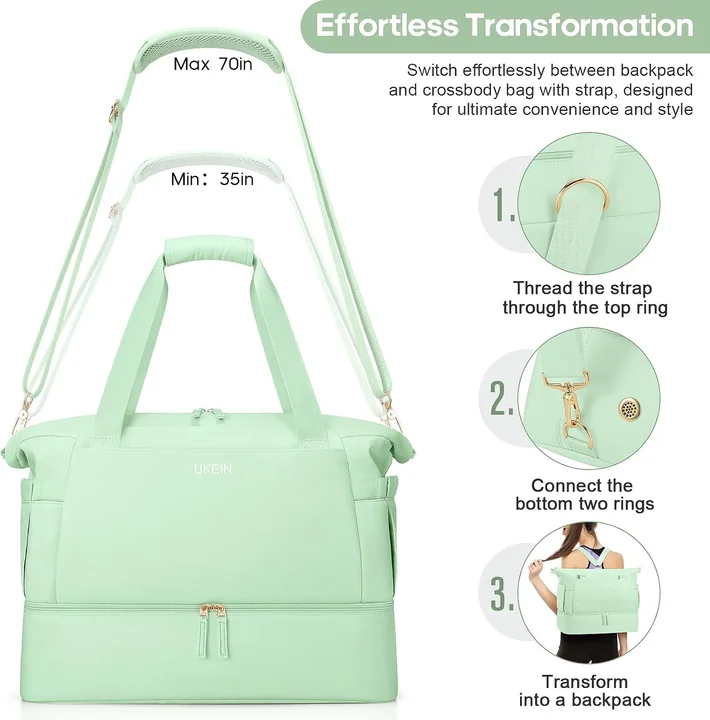
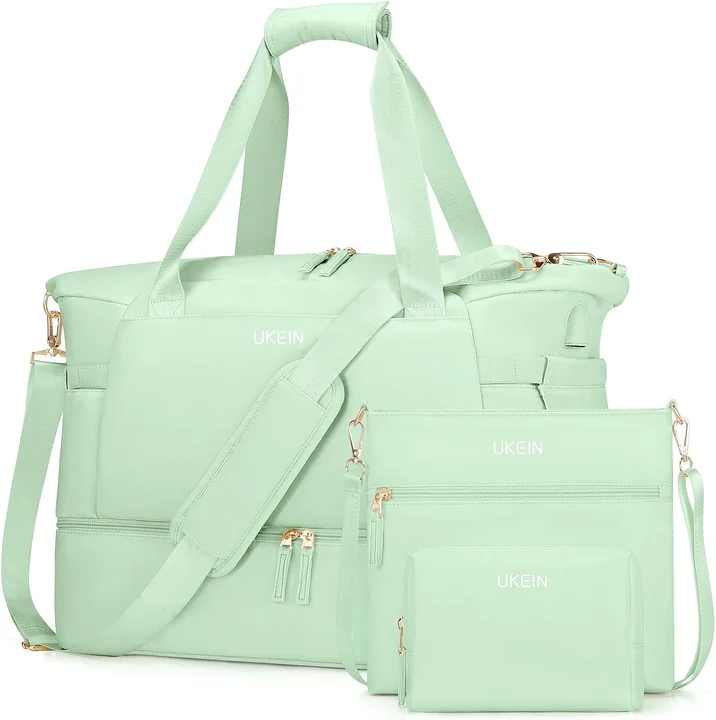
Every soft bag in this range and every hard case in it states a dry and wet separation pocket. It is the feature that sounds like marketing until the first time you fly home the morning after a swim.
The pocket is a lined compartment with its own zip. What goes in it is a wet swimsuit, a damp towel, walking socks after a hot day, or a shirt that met a coffee. What comes out of the rest of the case is dry.
It is not airtight and it is not meant to be. Leave something wet in it for two days and the smell will find the rest of the bag. The pocket buys you a flight, not a week.
The vented shoe compartment at the base of the backpacks and duffels here does the same job for a different problem. Shoes go in from the outside, they never touch the clothes, and the vents mean the compartment dries between uses.
Bags with a wet pocket and a shoe compartment
See all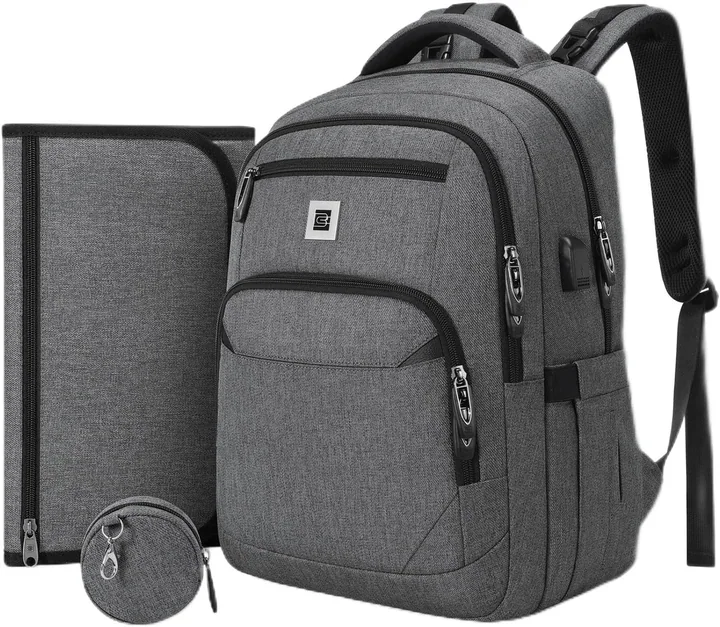
Travelling Bags, Travel Backpack Bag for Women with USB Charging Port & Shoe
4.5 out of 5 (75) $19.99 - $29.99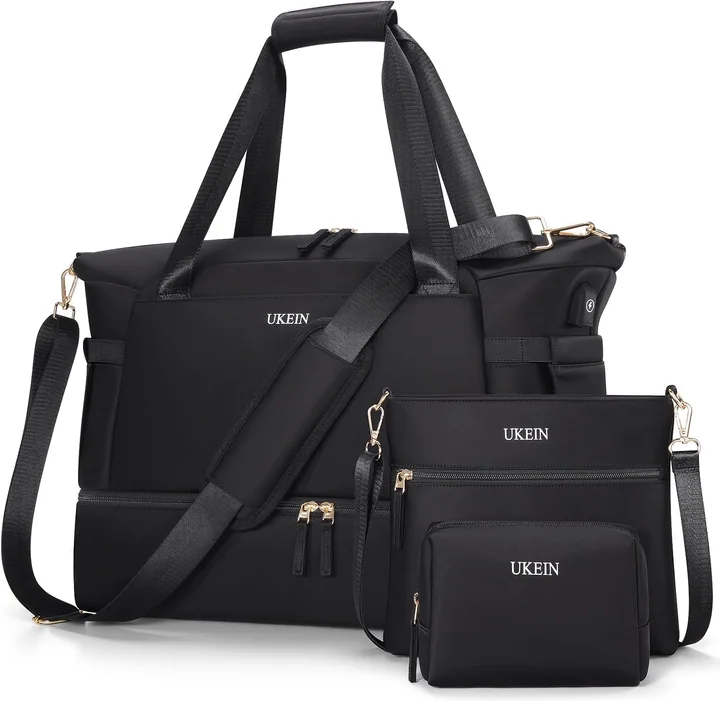
Travel Duffel Bag for Women, Gym Backpack Bag for Women with USB Charging Port
3 pieces 4.5 out of 5 (75) $19.99 - $29.99Batteries: the rule that is not negotiable
The one packing decision with a legal answer is where the batteries go. The Federal Aviation Administration is direct about it:
Spare (uninstalled) lithium ion and lithium metal batteries, including power banks and cell phone battery charging cases, must be carried in carry-on baggage only.
Federal Aviation Administration, PackSafe: lithium batteries in baggage
The reason is fire. A lithium cell that shorts in the cabin is a problem the crew can see and reach. The same cell in the hold is a problem nobody knows about until the smoke detector goes.
Two practical consequences follow. A power bank never goes in a checked case, no matter how carefully it is wrapped. And a carry-on that gets gate-checked on a full flight has to be opened at the door so the power bank comes out and travels with you.
The same source asks that terminals be protected from short circuit, which in practice means tape over the contacts or a battery in its own pouch rather than loose against a set of keys.
This is the reason the backpacks in this range carry a charging port at the strap rather than a battery. The port is a cable to a socket inside the bag. You supply the power bank, and it is yours to carry into the cabin.
Fragile things, honestly
No case in this class protects a fragile object on its own. A polycarbonate shell spreads an impact, and spreading is not stopping. What protects a bottle or a lens is clothes, and the position within the case.
The rule is the middle. Something fragile goes in the geometric centre of the packed case with at least two inches of soft clothing on every side, including underneath. A fragile item against a wall of the case is against the wall that will be hit.
Bottles get one more step. Put the bottle in a plastic bag before the clothes go round it, because a bottle that survives the flight and leaks at the cap has still ruined the case.
Anything irreplaceable does not go in the hold at all. That is not a packing technique, it is the only reliable answer, and it is the reason the personal item allowance exists.
The other end of the trip
Unpacking is where a case earns its second year. Three habits cost five minutes and prevent almost every problem people blame on the case.
- Empty it completely. A case stored with something in it holds the smell of that thing for months.
- Wipe the wheels and the base. Grit in a castor is what grinds the bearing flat over a season.
- Store it open. A closed case with a damp lining grows a smell that no wash removes. Left open in a cupboard it dries in a day.
Storing a case inside a larger case is the usual advice and it is fine, provided both are dry and both are open when they go together. The five-piece set here nests exactly this way.
A note on colour and the carousel
The maker names 15 colourways across this range, and the list below is what appears on the labels. The reason it belongs in a packing guide is the arrival hall: the faster you identify a case, the less time it spends on a carousel where anybody can lift it.
| Colour on the label | Lines that carry it |
|---|---|
| Army Green | 1 |
| Beige | 5 |
| Black | 5 |
| Blue | 6 |
| Cream | 1 |
| Dark Coffee | 1 |
| Dark Green | 1 |
| Green | 3 |
| Grey | 4 |
| Light Green | 2 |
| Military Green | 1 |
| Mist Violet | 1 |
| Pink | 5 |
| Red | 1 |
| Violet | 1 |
If a dark case is what you want, the cheap fix is a strap in a colour across the shell. It is visible at distance, it holds the case shut if a zip fails, and it costs less than a coffee.
Packing cubes, honestly assessed
Packing cubes are the most recommended travel purchase and the most oversold. They do one thing well and two things badly, and it is worth separating them.
What they do well is find things. A cube of t-shirts is a drawer. Living out of a case for a week without unpacking is far easier when the case is four labelled blocks rather than one pile, and that is the whole benefit.
What they do badly is save space. A cube adds fabric and adds air at its corners, and a case packed with cubes holds slightly less than the same case packed with rolls. The compression cubes that promise otherwise compress the clothes, not the case, and what they compress they crease.
The second problem is weight. Four cubes weigh most of a pound, and a pound out of a fifty pound allowance is a pair of shoes.
The reasonable position is one or two cubes rather than a set: one for underwear and socks, one for the things you want to find in the dark. The rest rolls directly into the case, which is what the cross straps are there to hold.
Five days in a cabin case, item by item
The most useful thing a packing guide can give is a list that actually fits. This one has been counted against a forty-five litre cabin case and leaves room for the way home.
- Worn on the flight: jeans, a shirt, a jumper, the heavier pair of shoes, the coat.
- Rolled into the case: four t-shirts, one shirt, one spare pair of trousers, five sets of underwear and socks.
- One layer: a light jumper or a cardigan, packed flat on top so it is reachable.
- Shoes: one spare pair, in bags, at the wheel end.
- Toiletry bag: at the wheel end beside the shoes, with the quart bag of liquids on top for the checkpoint.
- Electronics: in the personal item, never in the case.
That list is around thirty-five litres packed, which leaves ten for what the trip adds. If a swimsuit and a towel are needed, they replace the spare trousers rather than joining them.
The rule underneath the list is the one people resist. Two pairs of shoes covers almost every trip, and shoes are the single item that decides whether a cabin case works.
Cabin cases for that list
See allLuggage Sets 3Piece, Carry On Luggage 20in Suitcase Set With Backpack
20" · 3 pieces 4.6 out of 5 (2,666) $79.99 - $89.99Luggage Set with Backpack, Hardshell Carry On Luggage Airline Approved
20" · 3 pieces 4.6 out of 5 (286) $69.99 - $79.99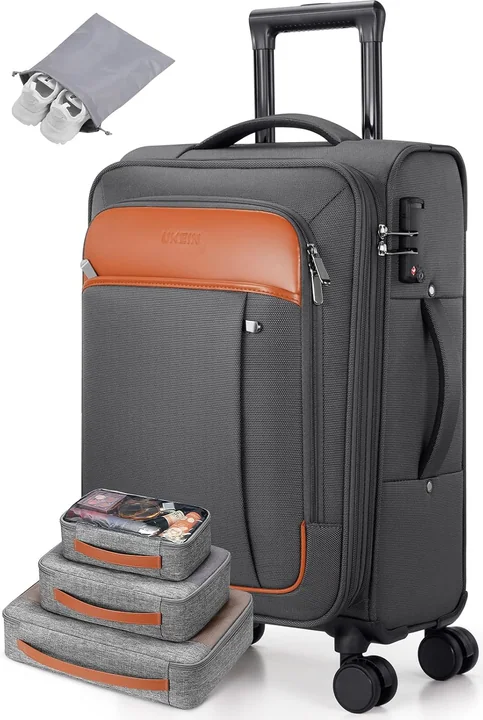
Expandable Carry On Luggage 22x14x9 Airline Approved, 20Inch Softside Carry On
20" · 45–55 L 4.5 out of 5 (161) $69.99Gym kit, sports shoes and the vented compartment
A bag that carries clothes and a pair of used trainers has one problem, and every feature in this part of the range is aimed at it.
The vented shoe compartment at the base of these duffels and backpacks is loaded from the outside and sealed from the main space. Shoes go in dirty, the vents let the compartment dry between uses, and nothing in the top of the bag ever touches a sole.
The wet pocket takes the other half of the problem. A damp kit in a lined pocket keeps its damp to itself for a few hours, which is the length of a commute rather than the length of a weekend.
The failure mode is leaving either compartment loaded. A shoe compartment with trainers in it overnight is a smell in the bag by morning, and no lining prevents that. Empty both at the door, the same way you would empty a lunchbox.
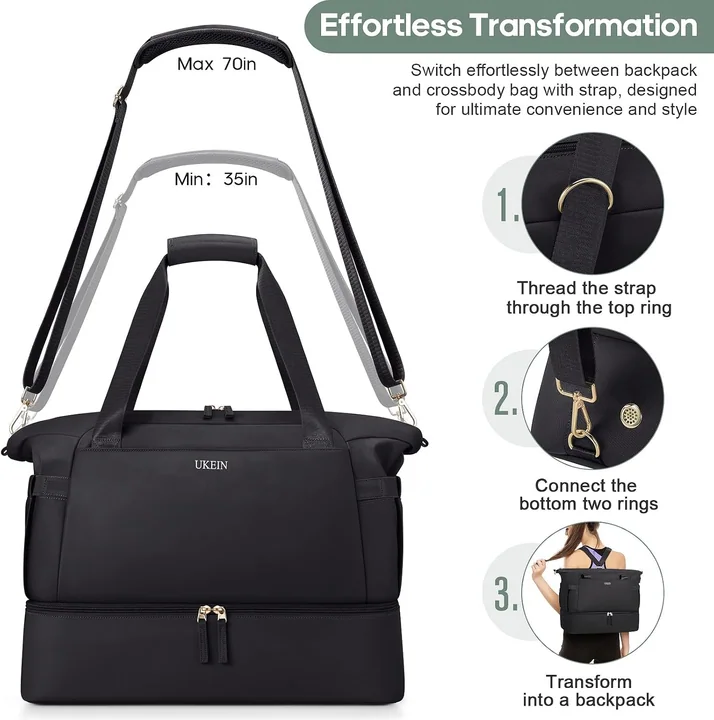
The charging port at the strap is the third piece of the same design. It is a cable from a pocket inside to a socket outside, and it is useful precisely because the bag is on your back and the power bank is not.
Packing for a child, in one bag rather than three
A child's kit is small in volume and awkward in shape, and the mistake most families make is spreading it across every bag they own.
The single-bag approach works better. One backpack carries the changing pad, the bottles, the spare clothes and the pacifier case, and it is the bag that comes off the stroller and goes on a bench. Everything else lives in the main case.
The diaper backpack in this range is built for that: a removable changing pad, an insulated pocket for bottles, a detachable pacifier holder and hooks for the stroller frame. It opens wide rather than from the top, which matters when you are working one-handed.
What no bag solves is the second-day problem. A trip with a small child needs a resupply of the two or three items that get used fastest, and packing three days of those into a bag sized for one day is how the bag stops closing. Buy them there instead.
The diaper backpack
See allThe way home weighs more
Almost every case is packed twice, and the second packing is the one that goes wrong. Three things change on the way home and all of them add volume.
- Laundry does not fold. Worn clothes take up roughly a quarter more room than clean ones, and no technique closes that gap.
- Souvenirs are dense. A bottle, a book and a jar are the heaviest things most people bring back, and they arrive after the case was already full.
- The coat comes off. A coat worn out in January is a coat carried home in a case in April.
The planned answer is to pack out at about eighty per cent, which is what the five-day list above does. The unplanned answer is expansion, and only a soft case has it: the carry-on here states forty-five litres closed and fifty-five open.
The other honest answer is a folded bag in the bottom of the case. A packable duffel weighs a few ounces and turns the return trip into two bags rather than one that will not close, and one of them can be a personal item at no cost.
Documents, keys and the things that never go in the hold
There is a short list of items that belong on your person or in the bag under the seat. The reasoning is the same for all of them. A hold bag can be delayed by a day, and none of these survives that.
- Passport, tickets and cards. A delayed case is an inconvenience. A delayed passport is the end of the trip.
- Medication, in its labelled packaging, with enough for two extra days.
- Keys. House keys in a checked case mean you land at midnight and cannot get in.
- Chargers and cables. A phone at four per cent and a charger in the hold is a bad first hour.
- Glasses and a spare pair, because the spare in the case is no use when the case is elsewhere.
- One change of clothes on any trip where arriving presentable matters.
That list weighs almost nothing and takes about two litres. It is the argument for the personal item allowance existing at all, and the reason the backpack in a set is not a spare bag.
The habit worth building is packing that list first, into the same pocket every time. Consistency beats cleverness: a document pocket you always use is a pocket you never search for.
Smells, damp and the case that has been in a cupboard
The complaint people make most often about luggage has nothing to do with construction. A case that has stood unused for a year smells of the cupboard, and the smell moves into the clothes on the first night.
The cause is almost always the lining rather than the shell. Fabric holds moisture and holds odour, and a case closed with even slight damp inside ferments quietly for months.
The fix is prevention and it is free. Store the case open. If it has been closed and smells, open both halves, leave it in a dry room for two days, and put an open box of bicarbonate of soda inside for the second day. That removes almost everything short of mildew.
Mildew is different and it shows as grey spotting on the lining. It comes from packing something genuinely wet, and it is the reason the dry and wet pocket exists. Once it is there, the lining has to be washed rather than aired, and prevention is much cheaper than the cure.
Splitting a household across two cases
Two people travelling together have a choice that changes how a delayed bag feels: one case each, or one case shared.
Shared is lighter overall and faster at the desk. It also means that a lost case leaves both of you with nothing, and that the case reaches the weight limit while half full of one person's things.
The split that experienced travellers use is neither. Pack both cases, and put two days of clothes for each person in the other person's case. A delayed bag then costs one person two days of inconvenience rather than a whole trip of it.
That habit costs nothing and takes five minutes at packing time. It is the single most useful thing in this guide for anyone who checks a bag.
The same logic applies inside one case for a solo traveller: the things you would replace at any price go in the cabin bag, and the things you would shrug at go in the hold.
Tags, labels and finding a case that has gone missing
Every case that flies gets a paper tag at the desk, and the paper tag is the only thing the airline's system knows about. Anything else you add is for humans.
Put your name and a phone number inside the case as well as outside. Outside tags are torn off by belts. A card in the top pocket survives, and a case opened by an airline's central baggage office is identified by what is inside it.
Take the photograph before you leave. A picture of the packed case and a picture of the case closed does two jobs: it identifies the bag, and it supports the claim if the contents matter. The construction guide covers what an airline owes you and why the word provable is doing the work.
Remove old tags. Two barcodes on one case is how a bag ends up in the wrong city, and the sticker from the last trip is still scannable.
Why a case arrives bulging, and how to stop it
A hard case that comes off the carousel domed on one side has not been damaged. It has been packed past its closure line, and the shell has taken the shape it was asked to hold for eight hours.
Polycarbonate returns from a dent and does not return from a sustained deformation. A case forced shut over a full inch of clothes will keep a slight bulge, and that bulge is what stops the case standing square in a cupboard afterwards.
The line to pack to is the zip line, not the rim. If the two halves need a knee to meet, take something out. The thing to take out is almost always the third pair of shoes.
Soft cases have the opposite failure. They close over anything, and a soft case is therefore the one that arrives over the weight limit rather than over its volume. The scale is the honest check on a soft bag, and the eye is the honest check on a hard one.
The twenty-minute routine
- Lay everything out on the bed first. Packing straight from the wardrobe is how the third pair of shoes gets in.
- Take away one third. Everyone overpacks by roughly that much, and nobody has ever regretted the third that stayed home.
- Roll, then load heavy to light from the wheel end.
- Fill the corners with socks. Empty corners are where a case flexes.
- Strap it down until nothing moves.
- Batteries and documents into the bag that stays with you.
- Weigh it, photograph it, close it.
Do that and a case arrives the way it left. The size guide covers what fits in each shell, and the guide to hard and soft construction covers what happens when the case comes back damaged.
Soft bags, most rated first
See allTravel Duffel Bag for Women, Gym Backpack Bag for Women with USB Charging Port
3 pieces 4.5 out of 5 (75) $19.99 - $29.99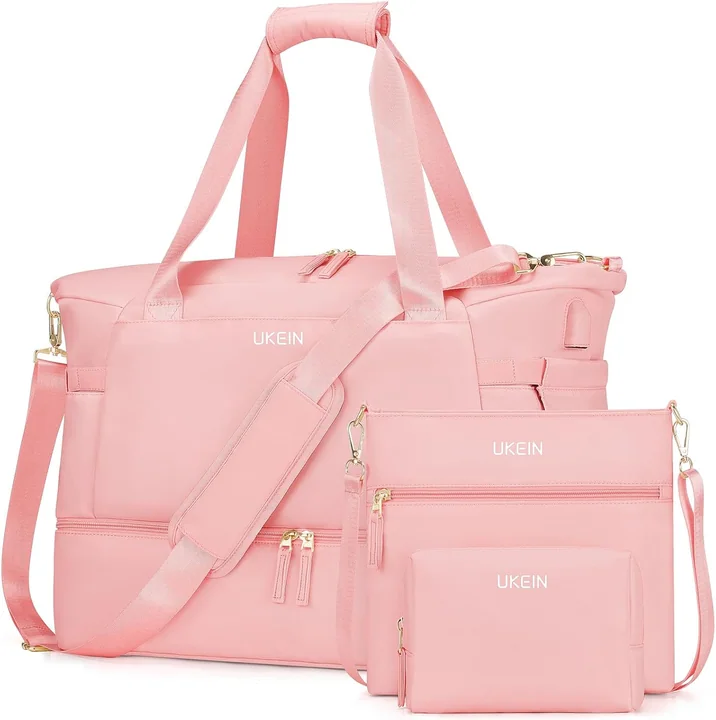
Sources we read
| Source | Published by | Read |
|---|---|---|
| PackSafe: lithium batteries in baggage | Federal Aviation Administration | 5 September 2026 |